This quarter saw continued regulatory activity across Europe’s open banking ecosystem, despite a modest reduction in the overall number of authorised Third Party Providers (TPPs). The total now stands at 547, a net decrease of five from the end of Q1.
This total comprises 357 TPPs in the EEA and 190 in the UK. While the overall number of authorised providers declined slightly during the quarter, activity continued across multiple jurisdictions, reflecting an ecosystem that continues to evolve.
There were 25 authorisation status changes during Q2, comprising 10 new authorisations and 15 withdrawals. New TPPs were authorised in the UK, Czechia, Latvia, the Netherlands and Sweden, while withdrawals were recorded across the UK, Ireland, Italy, Malta, the Netherlands, Poland and Sweden.
Passporting activity remained broadly consistent during Q2, with the average number of passported-in TPPs per EEA market easing marginally to 153. This reflects a modest reduction in cross-border permissions while continuing to demonstrate the scale and interconnectedness of Europe’s open banking ecosystem.
TPP Tracker Country Breakdown
Q2 2026 Highlights (EEA)
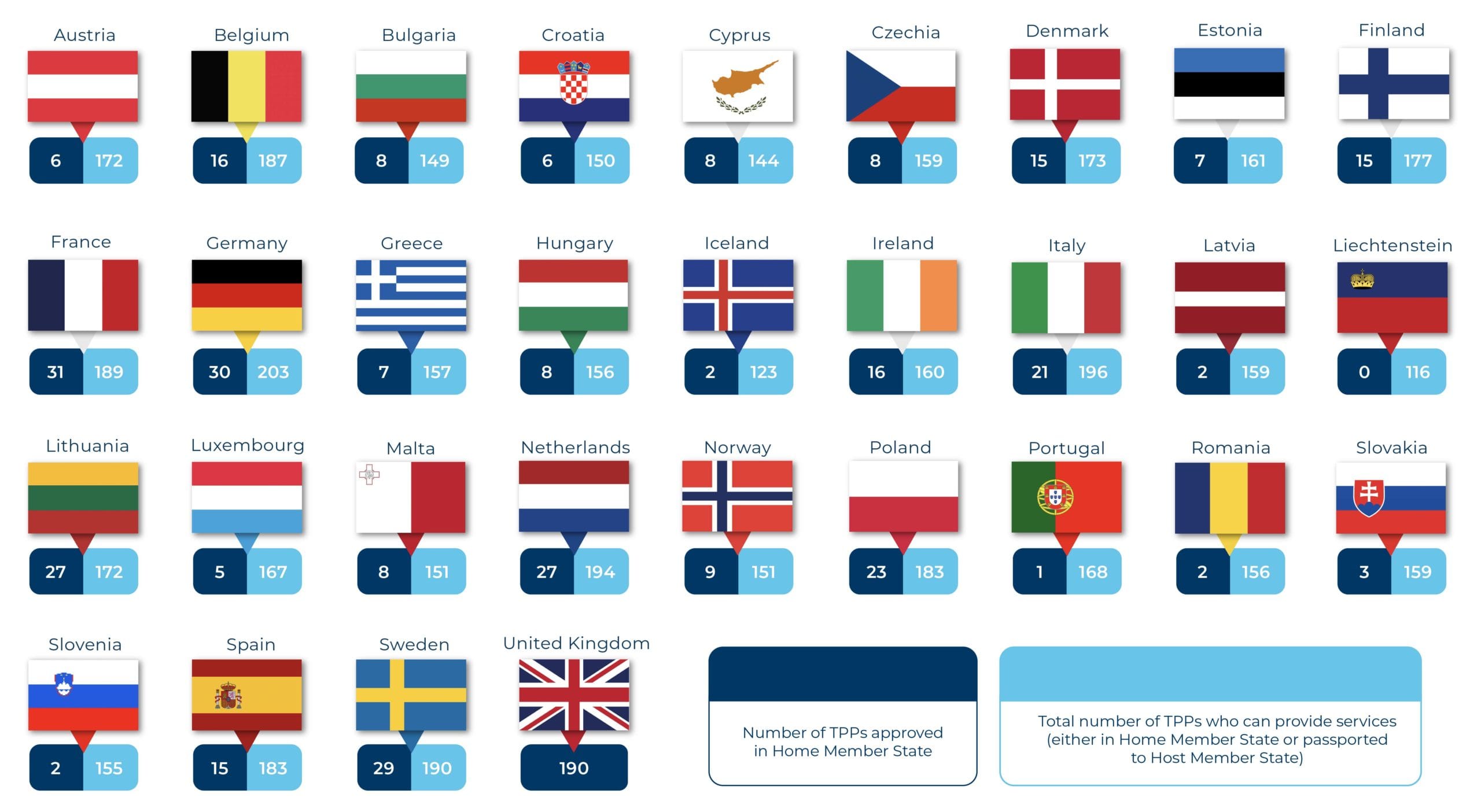
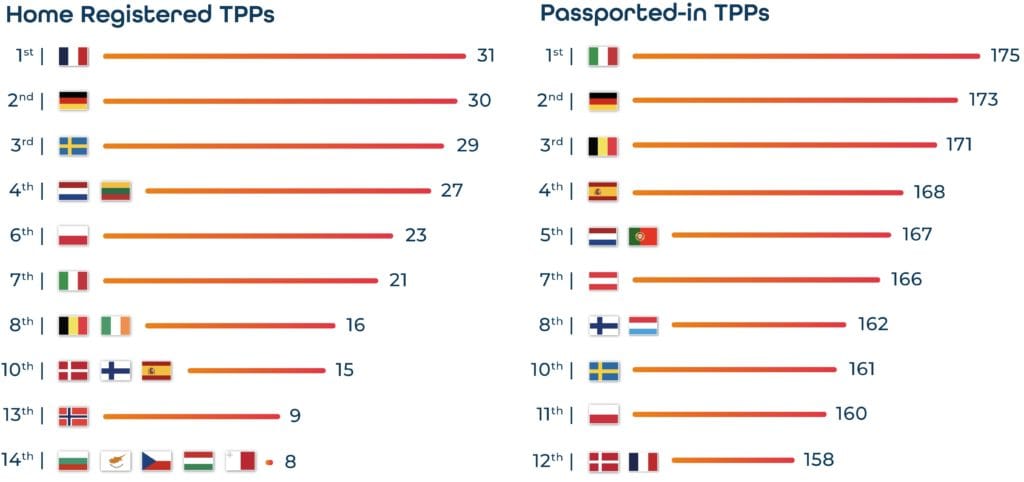
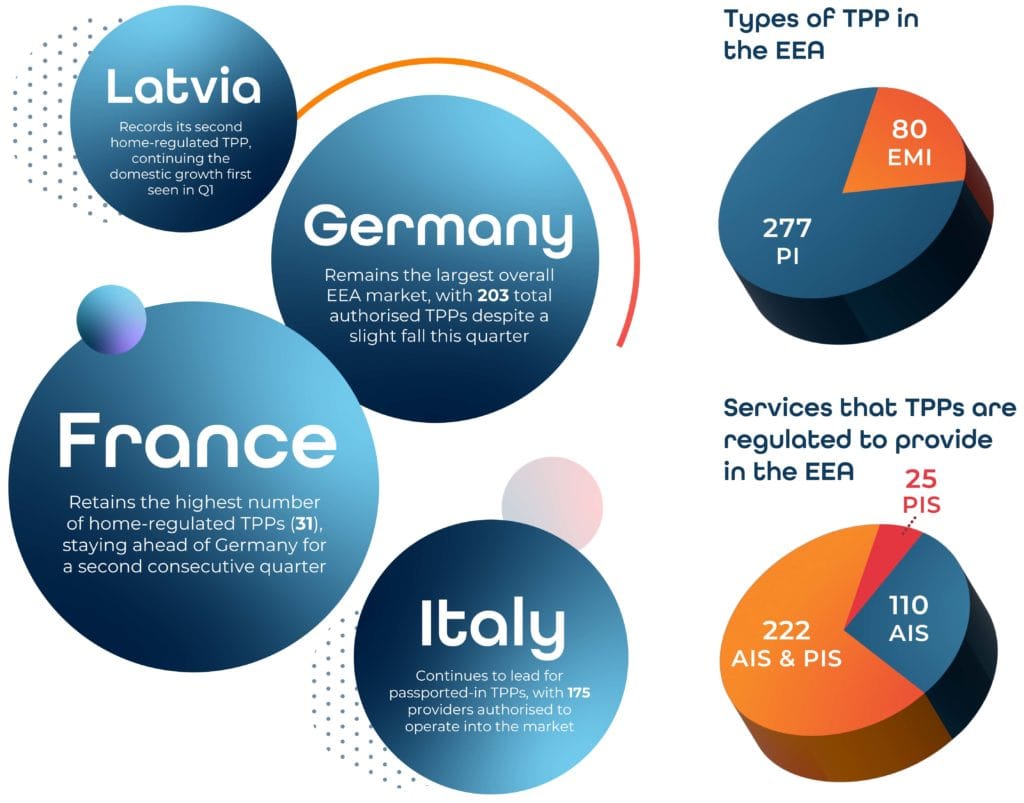
- France retains the highest number of home-regulated TPPs (31), maintaining the lead it took last quarter.
- Germany (30) and Sweden (29) follow closely behind, with Sweden recording one additional home-regulated TPP during Q2.
- Italy continues to lead by passported-in TPPs with 175, despite a slight reduction from the previous quarter.
- Germany remains second with 173, underlining the continued importance of cross-border services across Europe’s largest open banking markets.
- Regulatory approvals were granted to six new TPPs across four EEA markets during the quarter: Czechia (1), Latvia (1), the Netherlands (2) and Sweden (2). Conversely, eight TPPs lost open banking permissions across six EEA countries: Ireland (1), Italy (1), Malta (1), the Netherlands (1), Poland (3) and Sweden (1).
- Liechtenstein (0), Portugal (1), Iceland (2), Latvia (2), Romania (2) and Slovenia (2) remain the EEA markets with fewer than three home-regulated TPPs. Despite their relatively small domestic ecosystems, these markets continue to benefit from significant cross-border participation, with each hosting more than 100 passported-in TPPs.
- Passporting activity remained broadly consistent throughout Q2, with each EEA market having an average of 154 passported-in TPPs, reinforcing the continued scale and interconnectedness of Europe’s open banking ecosystem.
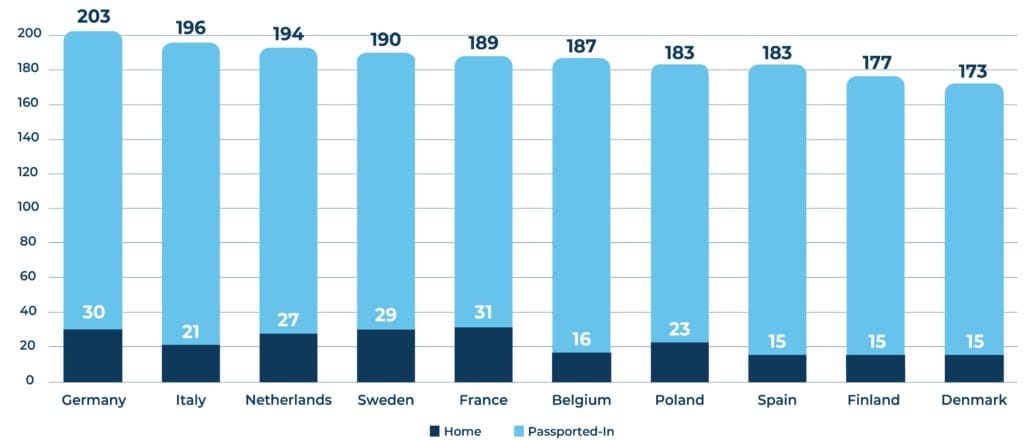
- Germany remains Europe’s largest overall open banking market with 203 authorised TPPs, followed by Italy (196), the Netherlands (194), Sweden (190) and France (189), demonstrating the continued depth of Europe’s most mature open banking ecosystems.
Increase in TPPs Passporting Services
Top 10 EEA Markets (by Total TPPs)
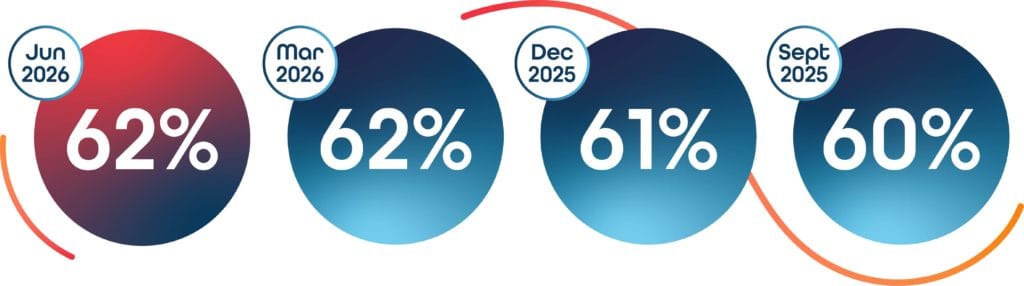
TPPs in the EEA passport services outside their domestic market (62.5%)
Average number of passported-in TPPs per EEA market
Of EEA countries now have more than 150 authorised open banking TPPs
Authorisation status changes recorded during Q2
The top countries by TPP (EEA)
Country Spotlight
Reflections from Our CEO

"Q2 saw a modest reduction in overall TPP numbers, but the level of authorisation status change shows that Europe’s open banking ecosystem continues to move. With 10 new authorisations and 15 withdrawals across the EEA and UK, the market is still evolving rather than standing still.
What remains particularly important is the nature of the permissions being held. More than 62% of EEA-regulated TPPs are authorised to passport their services into other markets, while 247 out of 357 now hold permissions to provide payment initiation services. This represents more than 69% of EEA-regulated TPPs and continues the gradual upward trend observed in recent years.
Payment initiation permissions carry a different risk profile. Where a TPP is authorised to initiate payments on behalf of account holders, financial institutions need to be confident not only that the entity is regulated, but that it has the right permissions, in the right market, at the point of access.
As PSD3, PSR and FiDA move closer, real-time oversight and continuous permission verification remain essential to maintaining trust, security and confidence across an increasingly interconnected financial ecosystem."
Mike Woods, CEO Konsentus