Eight years after Mexico’s Fintech Law positioned the country as a regional pioneer in Open Banking, the promise of Open Finance remains compelling, but progress has been uneven.
In our previous white paper, Five Years of Open Banking in Mexico, we reflected on the strength of Mexico’s legislative foundations and the country’s potential to lead the region. That analysis still holds true. The vision was ambitious and well-articulated. Yet today, as the fintech sector enters a phase of consolidation and deeper integration with traditional banks, the question is no longer about ambition. It is about execution.
Through our continued engagement with regulators, financial institutions and fintechs across Mexico, one theme consistently emerges: Open Finance is not a product, it is an enabler.
This distinction is critical. Open Finance is not a single API rollout or compliance obligation. It is shared infrastructure that allows secure, consent-driven data exchange. When implemented effectively, it underpins better credit assessment, more tailored product development, lower operational costs and broader financial inclusion. It enables partnerships between banks and fintechs that move beyond competition toward collaboration.
The market understands this. The challenge lies elsewhere.
The Regulatory Gap
Mexico’s Fintech Law established clear guiding principles: financial inclusion, innovation, competition, consumer protection and technical neutrality. However, secondary regulation and operational clarity have evolved more slowly than the ecosystem anticipated.
In our discussions with ecosystem participants, regulatory uncertainty is consistently cited as the primary factor slowing implementation. Institutions are ready to invest, but large-scale infrastructure decisions require clear rulebooks, defined standards and predictable supervisory frameworks.
This delay is particularly significant at a moment when fintech itself is maturing. Recent market commentary has highlighted a shift from rapid expansion to consolidation and integration with established financial institutions. Partnerships are deepening. Business models are stabilising. The ecosystem is becoming more collaborative.
In this environment, Open Finance should act as a neutral trust layer, a shared framework that supports integration, rather than a future ambition waiting for perfect conditions.
Moving Beyond APIs
Another recurring theme in our market conversations is a narrow understanding of “infrastructure.” Too often, Open Banking is equated solely with APIs. APIs are essential, but they are only one component of a functioning ecosystem.
A scalable Open Finance framework requires:
- Clear governance structures and rulebooks
- Standardised onboarding and accreditation processes
- Certification and conformance testing
- Directory services to identify authorised participants
- Ongoing compliance and risk monitoring
Without these elements, onboarding becomes fragmented, bilateral and slow. Each new participant faces bespoke due diligence processes, increasing costs and reducing speed to market. This is not sustainable for an ecosystem intended to foster innovation and competition.
Standardisation and automation of onboarding, supported by shared accreditation mechanisms, can dramatically reduce friction. They also enhance security, as automated and regularly reviewed processes reduce the risks associated with manual, inconsistent controls.
Trust, Risk and Digital Identity
Concerns around fraud and data security often surface in early-stage Open Finance discussions. However, global experience shows that properly designed ecosystems, built on consent management, certification regimes and standardised access protocols, do not inherently increase fraud risk. In many cases, they strengthen oversight and transparency.
This is particularly relevant in Mexico, where AML compliance, digital identity and fraud prevention are already strategic priorities. Open Finance, if underpinned by a robust trust framework, can complement these objectives by improving traceability, authentication and secure data exchange.
Trust frameworks do more than mitigate risk; they enable confidence between institutions that may historically have viewed each other as competitors. In markets around the world, the transition from suspicion to structured collaboration has depended on clear governance, shared standards and transparent oversight.
Governance and Shared Ownership
Open Finance infrastructure is not a public relations initiative, nor is it a fintech-only project. It is shared infrastructure. And shared infrastructure requires shared ownership.
In our engagement with the Mexican ecosystem, there is broad recognition that governance must include both financial institutions and fintechs. A collaborative model, even where regulators retain ultimate rulemaking authority, fosters transparency and long-term sustainability.
Equally important is the question of funding. Infrastructure cannot be sustainable if its costs and benefits are unevenly distributed. Reciprocity in data access and fair contribution models are essential to ensure that all participants see commercial value in the system.
Mexico does not need to replicate any single international model. In fact, the most effective path forward will likely draw on global best practice while adapting to national realities, institutional structure, market maturity and regulatory architecture. As an example, the UK experience offers valuable lessons in trust frameworks and governance design, but local implementation must reflect Mexico’s context.
From Vision to Implementation
Mexico has the talent, the legislative foundation and the market maturity to deliver Open Finance at scale. What is needed now is coordinated execution.
An industry-led working group or structured sandbox initiative could provide constructive input to regulators, test technical approaches and accelerate readiness while formal frameworks are finalised. At the same time, regulators must be equipped not only to define policy but to oversee programme delivery, from stakeholder consultation to operational supervision.
The opportunity remains significant. Open Finance can expand access to credit, lower barriers to entry for innovators, enable more personalised financial products and drive deeper inclusion across underserved populations. It can also provide those already served with more competitive, efficient and secure services.
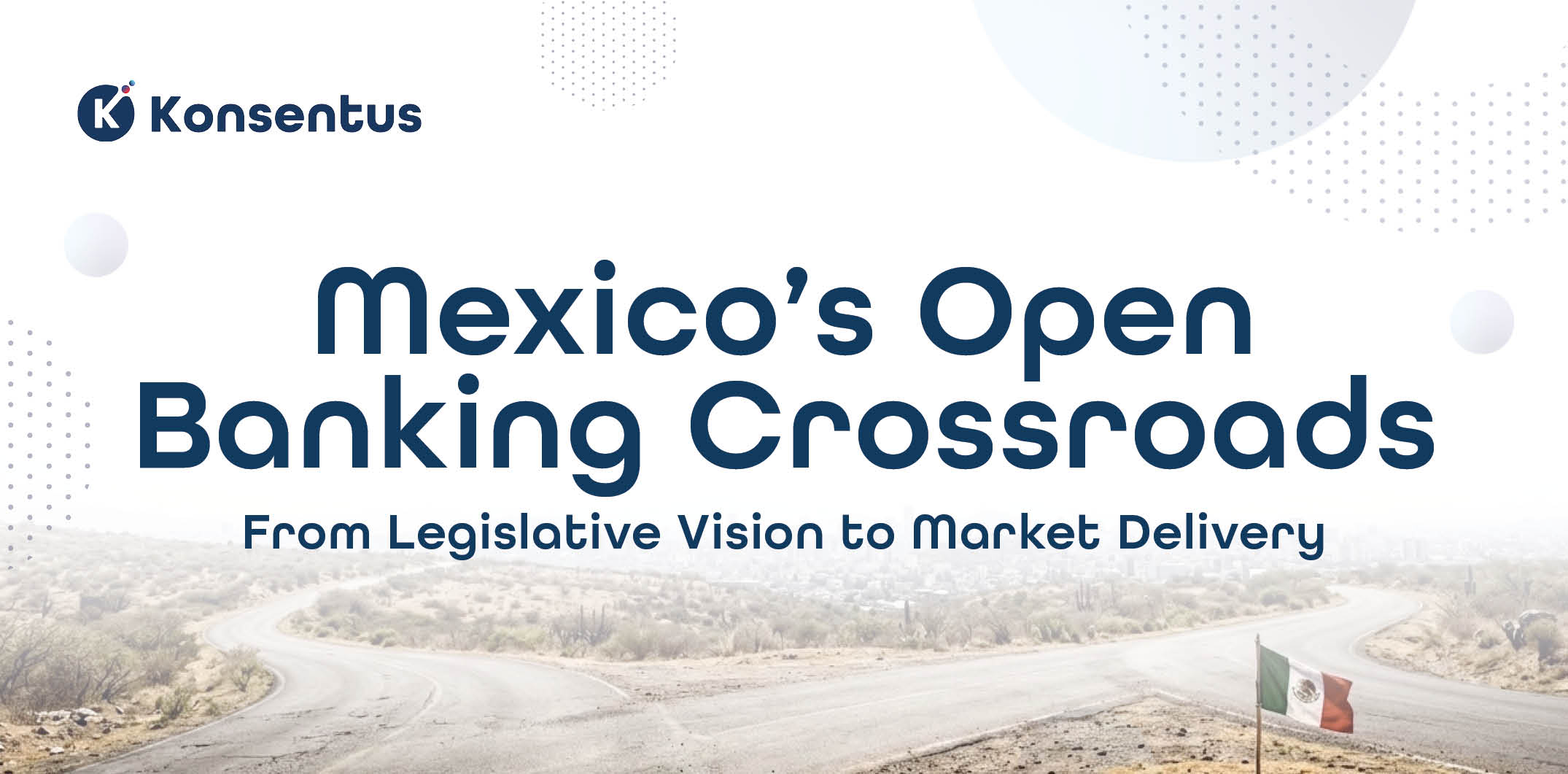
Eight years after Mexico’s bold legislative step, the ecosystem stands at a crossroads. The foundations are in place. The market is aligned. Integration between fintechs and banks is accelerating. The next phase requires moving decisively from principle to practice.
Open Finance was never about compliance alone. It is about modernising financial infrastructure in a way that supports innovation, competition and inclusion. Mexico has already demonstrated leadership in setting the vision.
Now is the moment to deliver it.
Building a secure and scalable Open Finance ecosystem requires more than regulation. It requires operational infrastructure, governance frameworks and trusted onboarding mechanisms that allow institutions to participate with confidence.
We support central banks and regulators in designing and delivering safe and secure Open Banking and Open Finance ecosystems that foster innovation, competition and financial inclusion. Get in touch to find out more.

Federico Suarez
SVP, OBE Latam